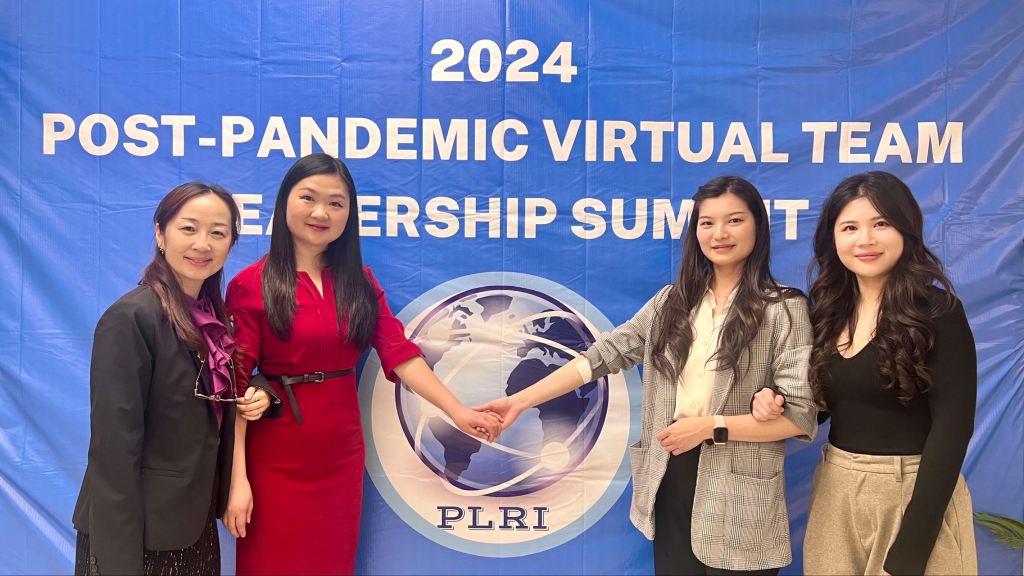
Thank you, Dobe WE, for having me to be here. Most importantly, I sincerely thank our distinguished guests, sponsors, and volunteers working together to make such a wonderful and first in-person virtual team leadership summit in the post-pandemic world.
My name is Yanli He. As introduced, I earned my Ph.D. in Organizational Leadership. Currently, I serve as the CEO of the Post-Pandemic Leadership Research Institute. At today’s summit, we focus on virtual team leadership and bring virtual team leaders and team members online to offline to promote interpersonal relationships in the real world. I was invited because I researched the influence of leadership traits on virtual teams’ longevity in Silicon Valley from 2021-2023. You may wonder why I studied leadership traits: the personalities and characters of a leader. And how that influences virtual teams to achieve longevity.
Back in early 2020, the outbreak of COVID-19 forced thousands of companies, organizations, schools, governments, and even the church to switch to a work-at-home virtual team model without any preparation. Instead of going to the office, everyone started to attend virtual team meetings, classes, and worship with a computer, laptop, iPad, or even just a smartphone at home. With the combination of digital devices and the internet, everyone can work anywhere at any place regionally, nationally, and internationally. In the post-pandemic world, you may attend a virtual team meeting while lying down on the beach, having breakfast in a hotel, doing the laundry at home, staying at the airport, or even on an airplane. So, in these cases, think about one question: As a leader, how do you ensure your virtual team members concentrate on the work if they shut off the camera in virtual team meetings? Suppose we held today’s summit virtually; I believe that most of you are more likely to shut off the camera doing other things while listening to my presentation right now. Right?
Although virtual teams did exist before the pandemic, they were limited to international business, IT, project management, and education industries. During the pandemic outbreak, most of us needed to adapt to changes and learn how to collaborate effectively in virtual team settings. For example, during virtual team meetings, such as Zoom, Google Meet, or Microsoft Teams, we not only just attend the meetings but also need to familiarize ourselves with all the virtual meeting functions, such as mute and unmute, raise up hands, turn on and turn off the camera, the chat room, screen sharing, and so on.
My own examples could perfectly address the importance of being familiar with the functions of virtual team meeting software. In the early days of the pandemic, at a Zoom meeting, I forgot to mute the microphone; then, everyone was annoyed as the kids made noise playing around the home. Even worse, I did not realize it until one of my colleagues reminded me by sending me a private message in the chat box at the end of the meeting. Can you imagine how other team members felt and how awkward I was then?
Here is another example. During the virtual meeting break, one of my team members forgot to turn off her camera, and then she changed her shorts in the same room at home. Can you imagine what was so awkward for all of us? So, as a virtual team leader, you not only let your team members turn on the camera and turn off the voice during the meeting but also need to remind them when to turn off the camera during the break. In other words, in this digital world, leaders are not only leading their teams but also managing technology in information sharing and communication. In the post-pandemic world, virtual teams have evolved from global teams to regional teams, from one-off teams to permanent teams, from totally virtual to hybrid virtual and in-person teams. In 2022, when big giants like Google and Apple call their employees back to the office, most team members still prefer to work from home despite being laid off. In the post-pandemic world, companies and organizations apply hybrid virtual and in-person work models. Virtual team leadership is interesting and necessary in the post-pandemic world.
So, what is leadership? Leadership is defined as the ability of an individual to influence, motivate, and enable others to contribute toward the effectiveness and success of the organization (House, 1999). In literature, leadership theory includes leadership traits, leadership behaviors, leadership contingency, and relational leadership, which can be characterized into four main styles: transactional leadership, transformational leadership, ethical leadership, and laissez-faire leadership (Avolio & Bass, 1995; Dartey-Baah, 2015; Kenney, 2012; Marashdah & Albdareen, 2020).
Although researchers have studied the influence of leadership styles or behaviors on virtual teams’ performance, the influence of leadership traits on virtual teams’ sustainability remains unknown. Although a few conducted the impact of leadership traits on virtual teams’ effectiveness, they were limited to higher education, IT, or project management fields. However, in the post-pandemic world, the fields of virtual teams cover almost all industries and have evolved from one-off teams to permanent teams. To achieve virtual teams’ longevity, I systematically researched the influence of leadership traits on virtual teams’ effective performance and sustainability.
So, what are leadership traits? As the first dimension of leadership, leadership traits focus on human stable and unique characteristics, which are individual differences in styles of thought, feeling, and behavior (Matthews, 2018). Leadership traits is viewed as the God-given gifts of individuals who can do extraordinary things (Germain, 2012). More interestingly, according to Bass (1990), traits theory dates back to the 6th century B.C., when the works of Chinese philosophers Lao Tzu and Confucius addressed the importance of leadership. Specifically, Lao Tzu described the qualities of a wise leader as selflessness, diligence, honesty, fairness, and empowerment (Heider, 1958; Zaccaro et al., 2004). Furthermore, leadership traits contribute to the leaders’ capacity, achievement, responsibility, participation, and status (Bass & Bass, 1989). Successful leaders categorically have different interests, abilities, and personality traits, which are significantly different from those of less effective leaders (Kanodia & Sacher, 2016).
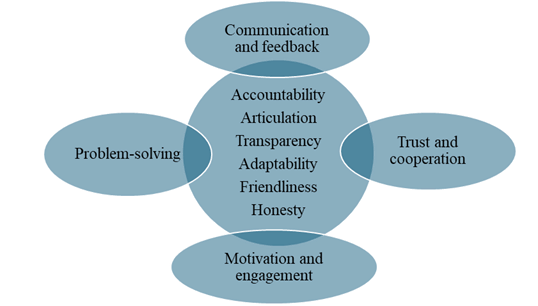
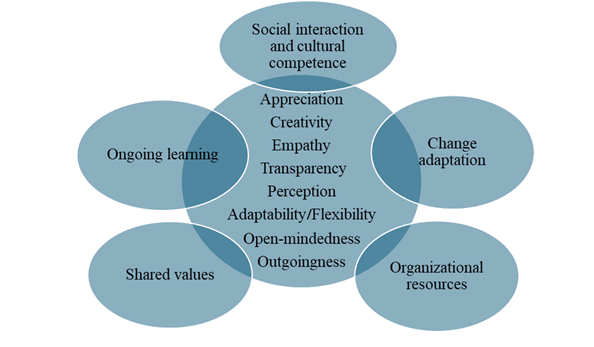
To explore the influence of leadership traits on virtual teams’ longevity, last year, I interviewed 12 virtual team leaders and team members who lived in Silicon Valley, and their industries covered information technology, project management, biotechnology, scientific research, government, real estate, finance, and sales management. This qualitative phenomenological study explored the influence of leadership traits on virtual teams’ effective performance and sustainability to achieve virtual teams’ longevity. In summary, leadership traits work together to influence virtual teams’ effective performance and sustainability by improving communication and feedback, problem-solving ability, trust and cooperation, motivation and engagement, ongoing learning, social interaction, cultural competence, change adaptation, shared values, and organizational resources to achieve longevity in virtual team settings.
At the end of last December, I was interviewed by a leadership consulting organization in Austria. One of the questions was: If you could only give one piece of advice to a young leader, what would you say to them?
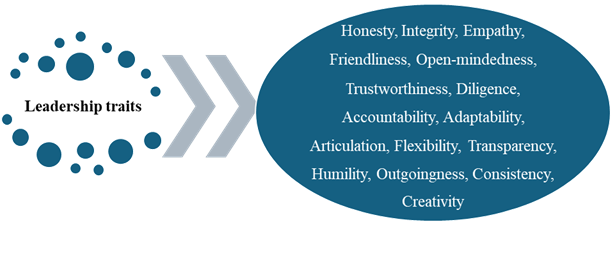
I would say, before starting your leadership journey, ask yourself two questions: (1) Why are people willing to follow you? (2) How do you lead these people to achieve goals and innovations? First, cultivate core leadership traits, such as honesty, integrity, accountability, transparency, and empathy, before leading the team. Those traits are the foundation of effective leadership and a bridge to bond the relationship between you and your team. Further, along the leadership journey, you will encounter various challenges, including conflicts, competition, and might suffer lawsuits and the unpredictable loss of core talents. You must have strong confidence, wisdom, high emotional intelligence, and leadership skills to move those challenges into opportunities.
I recall an employee, who was one of my core talents, threw a temper and decided to quit her job. Although distressed and very angry, I controlled my impulsion and emailed her to thank her for all her contributions since the startup. Moreover, I generously allowed her to continue using our tax software even though she resigned. At the end of the email, I welcomed her to return whenever she feels comfortable. As a result, my traits of sincerity, caring, and empathy touched her heart, and she chose to continue working for us as a contractor. In the meantime, I recruited an amazing new CPA, and we collaborated on many outstanding tasks.
At a leadership conference at The Wharton School, University of Pennsylvania in June 2023, one of the speakers, Motorola’s CEO, posted a question, “When your talent suddenly leaves, what do you do?” I also shared this story with him. Instead of losing the talent, I moved leadership challenges to change and got two talents with attractive personality. Eventually, leadership is a relationship (Kouzes & Posner, 2017). If you treat people with sincerity, caring, and empathy, they will feel it and, in return, reward you. As the quote by Theodore Roosevelt goes, “Nobody cares how much you know, until they know how much you care.”
Leadership traits are the foundation of effective leadership and a bridge to bond the relationship between you and your team and eventually move challenges to opportunities to achieve longevity in the post-pandemic world! Thank you so much!


Leave a Reply